
Cyber Insurance Readiness Assessment for Small Businesses

Many cyber insurance providers require organizations to demonstrate key cybersecurity controls before issuing or renewing coverage. Our Cyber Insurance Readiness Assessment helps businesses identify security gaps, strengthen their security posture, and improve readiness for cyber insurance applications and renewals.

  • Improve cyber insurance readiness
  • Identify security gaps before renewal
  • Strengthen controls commonly reviewed by insurers
  • Reduce cybersecurity and operational risk

What’s Included in the Assessment?

  • Review of cybersecurity controls commonly required by insurers
  • Identification of security gaps and improvement opportunities
  • Assessment of MFA, access controls, backups, and email security
  • Executive summary with prioritized recommendations
  • Readiness guidance for cyber insurance applications and renewals
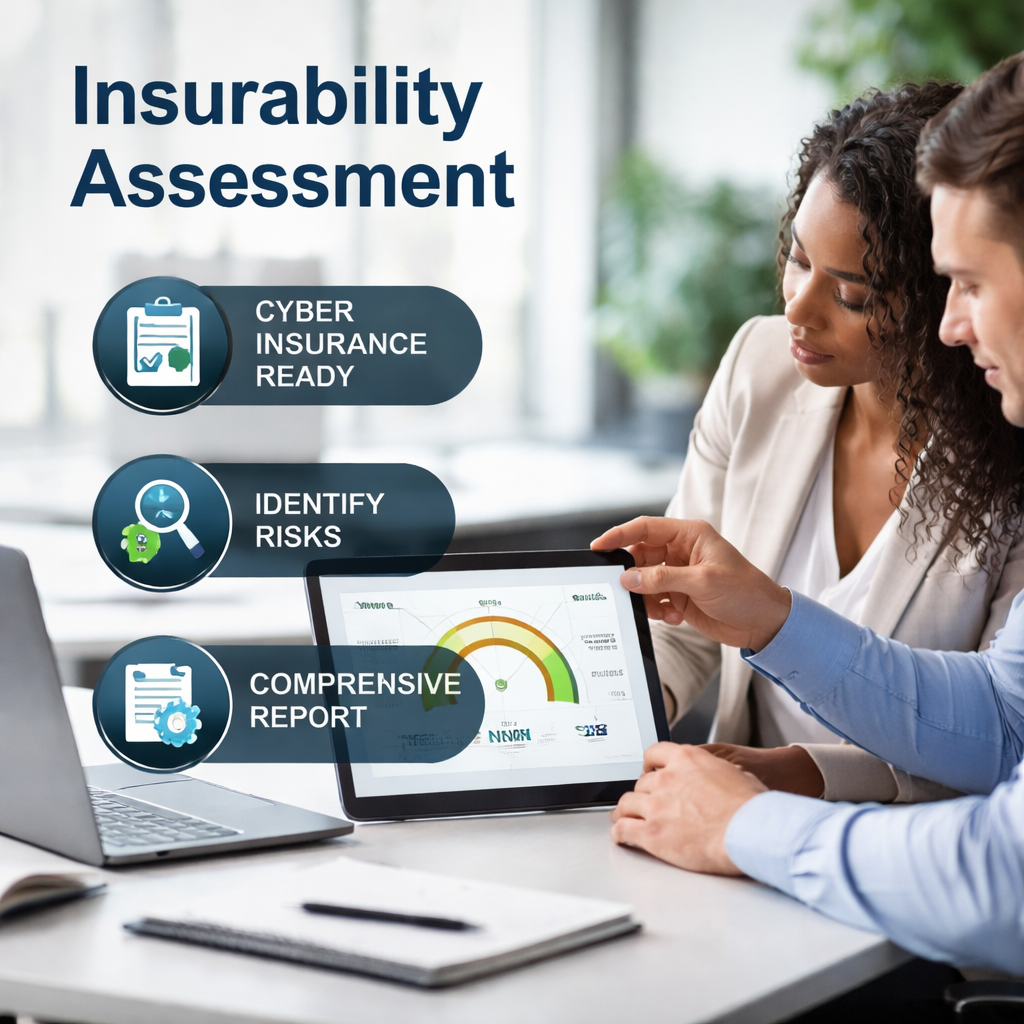
Common Cyber Insurance Security Requirements

Many cyber insurance providers evaluate security controls such as multi-factor authentication (MFA), privileged access management, email security, backup and recovery capabilities, security awareness training, and incident response preparedness. Our assessment helps organizations understand where they stand and what improvements may be needed.

Frequently Asked Questions About Cyber Insurance Readiness

Learn how cybersecurity controls can impact cyber insurance eligibility, premiums, renewals, and overall risk management.

What is a Cyber Insurance Readiness Assessment?

A Cyber Insurance Readiness Assessment evaluates your organization's cybersecurity controls against common requirements used by cyber insurance providers. The assessment identifies gaps, highlights potential risks, and provides recommendations to improve readiness for insurance applications and renewals.

Why do cyber insurance companies require cybersecurity controls?

Cyber insurance providers want to reduce the likelihood and impact of cyber incidents. Security controls such as multi-factor authentication (MFA), email protection, backup and recovery, and security awareness training help lower risk and improve insurability.

What cybersecurity controls do insurers commonly review?

Requirements vary by provider, but commonly reviewed controls include MFA, privileged access management, email security, endpoint protection, backup and recovery procedures, vulnerability management, employee security awareness training, and incident response capabilities.

Can cybersecurity weaknesses affect insurance premiums?

Yes. Security gaps may result in higher premiums, additional policy requirements, coverage limitations, or difficulty obtaining coverage. Improving cybersecurity controls can help strengthen your organization's risk profile.

Does a Cyber Insurance Readiness Assessment guarantee insurance approval?

No. Insurance decisions are made by individual providers based on their underwriting criteria. However, a readiness assessment can help identify issues that may affect eligibility and provide a roadmap for improving your security posture.

How often should organizations perform a Cyber Insurance Readiness Assessment?

Most organizations should perform a readiness review annually or whenever significant changes occur in their technology environment, security controls, business operations, or insurance coverage requirements.